
Why Is My Water Cloudy? Causes, Safety Tips, and Fixes
If you’ve filled a glass and watched it turn milky white, you’re probably wondering whether your tap water cloudy appearance means something is wrong. The good news: in the vast majority of homes, cloudy tap water is just trapped air bubbles, and it’s harmless. This guide explains exactly why it happens, how to tell the difference between harmless cloudiness and a real problem, and what to do next.
Quick Answer
Cloudy tap water is most often caused by tiny air bubbles that get trapped in your pipes due to water pressure or temperature changes, and it is not a health risk. The simplest way to confirm this: fill a clear glass and watch it for a minute or two — if the cloudiness clears from the bottom up, it’s just air escaping. If it doesn’t clear, or settles at the bottom, you may be dealing with sediment or hard water minerals instead.
Key Takeaways
- Air bubbles are the #1 cause of cloudy tap water and clear up within a minute or two.
- The “30-second glass test” tells you instantly whether your cloudy water is air, sediment, or hard water.
- The EPA requires public water systems to keep turbidity below strict limits because cloudiness can shield harmful microorganisms from disinfection.
- Persistent cloudiness that doesn’t clear, or water with an odd smell or taste, is worth testing or filtering.
What Causes Cloudy Tap Water?
Turbidity — the cloudiness or haziness of water caused by suspended particles or trapped air — is the technical term water professionals use for this exact phenomenon. According to the U.S. Geological Survey, this kind of cloudiness is most often nothing more than tiny air bubbles that rise to the surface and escape within seconds of filling a glass. Most of the time, the cause is mundane and temporary. Here are the most common reasons your tap water looks cloudy.
1. Trapped Air Bubbles (Aeration)
Air bubbles are by far the most common cause of milky or cloudy tap water. Cold water holds more dissolved oxygen than warm water, so when cold water from underground pipes warms up on its way to your faucet, that extra oxygen escapes as countless tiny bubbles, giving the water a cloudy, milky look. This effect is more noticeable in colder months, after nearby water main repairs, or when your home’s water pressure is unusually high, since pressurized water also holds more dissolved air that’s released once it reaches your tap.
2. Sediment and Mineral Particles
If the cloudiness doesn’t clear and instead settles toward the bottom of the glass, you’re likely looking at suspended solids rather than air. These particles can include fine sediment from aging pipes, soil disturbance near water mains, or recent construction work in your area’s distribution system. Total suspended solids, often abbreviated TSS, is the umbrella term for these particles, and they can originate from natural sources or from wear inside old plumbing. Homes on well water rather than a municipal supply tend to see this more often, since groundwater picks up minerals and sediment that city treatment plants would otherwise filter out.
3. Hard Water Minerals
Hard water — water with high concentrations of dissolved calcium and magnesium — can also produce a persistent cloudy or chalky appearance, especially if the cloudiness lingers well past the one-minute mark. Homes supplied by groundwater or in regions with naturally mineral-rich water sources are more prone to this type of cloudiness, and it often shows up alongside other hard water signs like soap scum or mineral buildup on fixtures. If that sounds familiar, our breakdown of hard water vs. soft water walks through exactly how to tell which one is running through your pipes.
Seconds for the glass test to reveal air vs. sediment
Max NTU allowed at any time under EPA rules
The 30-Second Glass Test: Is It Safe to Drink?
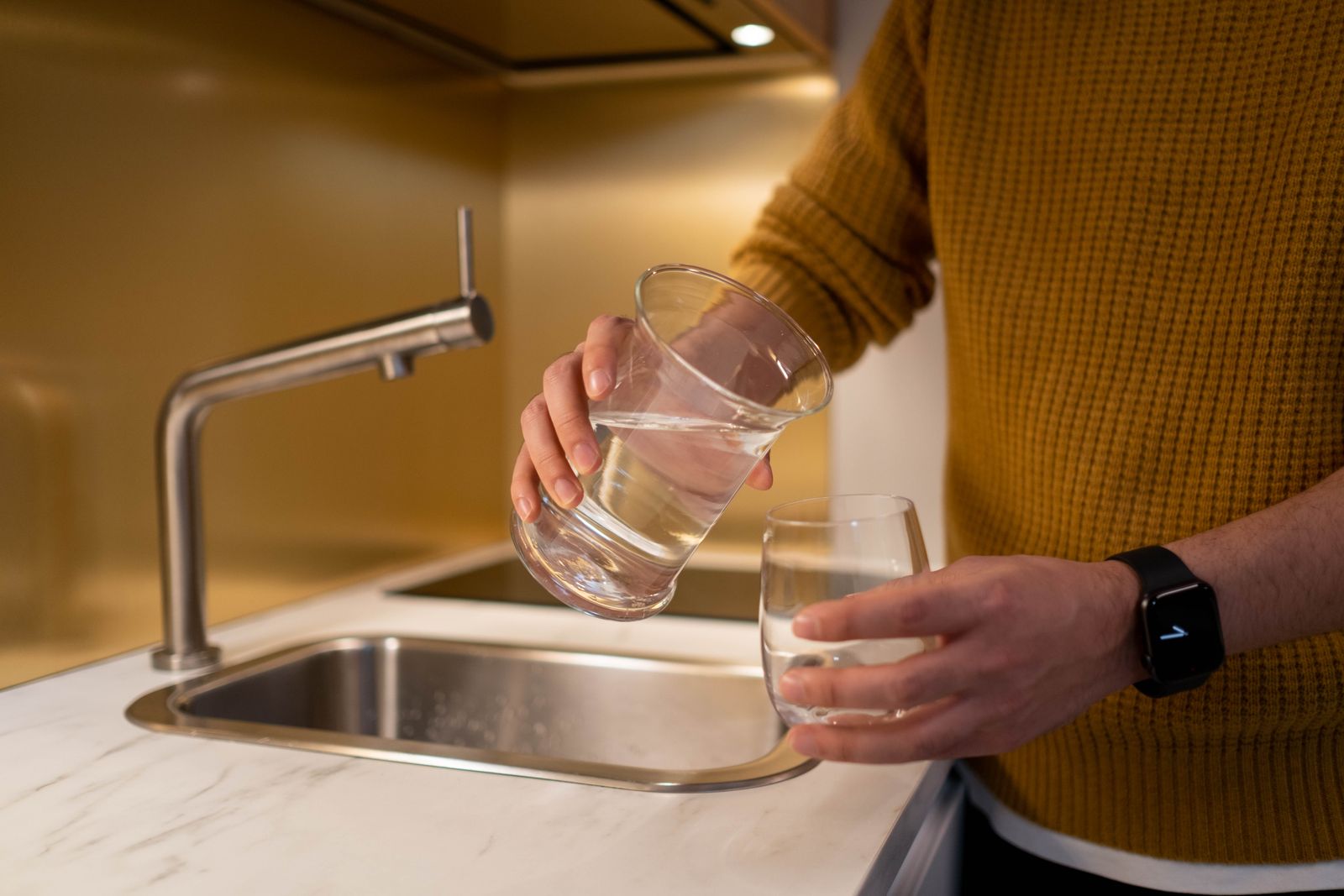
You don’t need a lab to get a first answer about cloudy tap water. This simple test takes less than a minute and tells you which category your water falls into.
- Fill a clear glass straight from the tap and set it on a flat surface.
- Watch for one to two minutes without moving the glass.
- Check the pattern: if the cloudiness clears from the bottom of the glass upward, that’s air escaping — completely safe to drink. If the cloudiness stays suspended, settles to the bottom, or doesn’t clear at all, you may have sediment, hard water minerals, or another issue worth investigating.
This test works because of basic physics: air bubbles are buoyant and rise to the surface, while solid particles are denser than water and sink or stay suspended. It’s the quickest way to separate a harmless aesthetic issue from something that deserves a closer look.
Is Cloudy Water Actually Safe to Drink?
In most cases, yes. Public water systems in the United States are required to meet EPA drinking water standards before that water ever reaches your tap, and cloudy water on its own is rarely a sign of contamination. That said, cloudiness matters more than it might seem on the surface, which is exactly why regulators take it seriously.
Under the EPA’s National Primary Drinking Water Regulations, systems using conventional or direct filtration must keep turbidity at or below 1 NTU (Nephelometric Turbidity Unit) at all times, and below 0.3 NTU in at least 95% of monthly samples. The reason this threshold exists isn’t cosmetic — suspended particles can physically shield bacteria, viruses, and parasites like Cryptosporidium from disinfectants, making it harder for treatment processes to neutralize them. So while a cloudy glass of water at your tap almost always reflects something harmless happening inside your own home’s plumbing rather than a treatment failure, the underlying turbidity standard is a genuine public-health safeguard upstream at the treatment plant.
If your water utility issues a boil-water notice or turbidity advisory, or if your cloudy water is accompanied by a foul odor, unusual color, or metallic taste, treat that as a signal to stop drinking it and contact your local water authority right away.
When Cloudy Water Is a Sign of a Real Problem
While most cloudy tap water is benign, a few warning signs suggest it’s time to test your water or call a professional:
- Cloudiness that never clears, even after several minutes of standing.
- A strange smell, such as a rotten-egg, chemical, or musty odor accompanying the cloudiness.
- Visible sediment that settles at the bottom of the glass rather than rising and dissipating.
- A bubbling or hissing sound at the tap, which can occasionally indicate dissolved gas other than ordinary air.
- Cloudiness limited to one faucet, which often points to a localized plumbing issue, like a worn fixture aerator, rather than a citywide water quality problem.
If you notice any of these, the most reliable next step is a water quality test, which can identify sediment levels, hardness, and any contaminants that a visual check can’t catch.
Protect Your Family with AquaJoud Filtration
If cloudy water persists after a few minutes, or you regularly notice sediment at the bottom of your glass, it may be worth testing your water and upgrading how it’s filtered. An AquaSlim under-sink filter or AquaJoud whole-home system removes sediment, chlorine, and other particles that cause persistent cloudiness — so your family gets water that looks as clean as it actually is. Not sure which setup fits your home? Our whole house vs. under-sink comparison breaks down the tradeoffs.
Frequently Asked Questions
Is cloudy tap water safe to drink?
Cloudy tap water is usually safe to drink when the cloudiness comes from trapped air bubbles and clears within a minute or two. If the cloudiness persists, smells unusual, or is paired with a boil-water notice from your utility, avoid drinking it until you’ve tested the water or contacted your local water authority.
What causes milky tap water?
Milky tap water is most commonly caused by dissolved air being released as tiny bubbles when water pressure or temperature changes between the main supply line and your faucet. Other causes include sediment from aging pipes, recent water main work, or hard water minerals like calcium and magnesium.
Does cloudy water clear up on its own?
Yes, if the cloudiness is caused by air bubbles, it will clear up on its own within one to two minutes as the bubbles rise to the surface and escape. If the cloudiness doesn’t clear or settles at the bottom of the glass, it’s likely sediment or minerals rather than air, and won’t resolve without filtration.
Why does my water look cloudy only in cold weather?
Cold water holds more dissolved oxygen than warm water. During colder months, water traveling from underground or reservoir sources warms up slightly on its way to your tap, releasing that extra oxygen as visible air bubbles. This is a normal seasonal effect and is not a sign of contamination.
Why is my water cloudy after plumbing work?
Plumbing repairs or nearby water main work can introduce extra air into the pipes, which typically causes cloudy water for a day or two afterward. Running the tap closest to your water meter for a few minutes often clears this up faster by flushing the trapped air out of the system.
Summary
Cloudy tap water is one of the most common water quality questions homeowners ask, and in the overwhelming majority of cases, the answer is reassuring: it’s trapped air bubbles, not contamination. The 30-second glass test — watching whether cloudiness clears from the bottom up — is the fastest way to confirm this at home. Persistent cloudiness, unusual odors, or sediment that won’t settle out are the signs that warrant a water test or a call to your utility. For families who want extra peace of mind, an AquaJoud or AquaSlim filtration system removes the sediment and minerals that cause the cloudiness that doesn’t go away on its own, so every glass looks as clean as it is.